
Iran's Islamic Revolutionary Guard Corps (IRGC) claims control of the Strait of Hormuz and reports striking a US destroyer, escalating tensions in the Middle East following retaliatory strikes between Iran, the US, and Israel.

US-Iran talks in Islamabad collapsed after 21 hours, exposing deep divisions over nuclear ambitions and sanctions.

Far from it; the country's resistance to the US, its nuclear ambitions, and its pursuit of influence and proxies across the Middle East are driven by a constant search for independence and security. Thus, Iran will never capitulate. Trump will learn this home truth ultimately, and it is going to be a humbling personal experience that may even destroy his presidency, predicts Ambassador M K Bhadrakumar.

The Indian embassy in Tehran has earlier stated that it is facilitating the safe movement of nationals who wish to leave Iran.
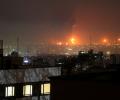
Israeli PM Benjamin Netanyahu has affirmed that the United States and his administration have achieved nearly total dominance over Iranian airspace following a series of coordinated military strikes.

The escalating conflict involving the U.S. and Israel with Iran has led to widespread disruption in the world of sports, with events postponed, travel plans thrown into chaos, and athletes seeking asylum.

It is time for India to step up and get Russia, China and Europe to agree to a joint appeal to all combatants. Time is of essence, tomorrow may be too late, asserts Colonel Anil A Athale, former head of the history division, ministry of defence.

United States President Donald Trump on Friday declared that there would be 'no deal with Iran except unconditional surrender' amid the escalating West Asia conflict, asserting that Tehran must capitulate before any diplomatic negotiations can proceed.

As days turn into weeks and America loses more planes, as the destruction of trillions of dollars worth military assets piles up, and dead bodies of soldiers return in ever greater numbers in coffins, Trump will have to answer some very difficult questions to save his presidency, notes Ambassador M K Bhadrakumar.

Iran has placed anti-personnel and anti-armour mines around the island, where US troops could potentially stage an amphibious landing.

The Israeli Air Force (IAF) said it struck several targets in Tehran, Shiraz and Ahvaz simultaneously over the past 24 hours, targeting sites linked to Iran's ballistic missile programme, air defence systems and military headquarters.

Trump may strike. He may announce productive talks and extend again. He may do both at the same time. Iran will not open the Strait on someone else's terms, so no matter what happens, that problem will remain unsolved. And the IRGC will still be collecting its $2 million toll from every ship bold enough to ask permission to pass.

Government officials are reportedly apprehensive that the 30,000 to 40,000 US troops currently deployed within the region could serve as the primary target of the Islamic Republic in the event of an all-out war.

The question is no longer whether the war will expand. It has. The next few days will tell us whether the war stabilises around Hormuz or whether the Strait itself becomes the trigger for a far larger rupture. What to watch for over the next 48 hours is simple: Any move by the US toward direct naval control of the Strait; any credible Iranian attempt to disrupt or mine shipping lanes and, critically, whether energy infrastructure in the Gulf continues to be targeted.If those lines are crossed in tandem, the war will no longer be containable within the region.

The core issues to be settled -- access to Hormuz, Israel's aggression in Lebanon, the question of Iran's nuclear programme, sanctions relief and compensation -- are thorny enough to require weeks of patient negotiation. The most likely outcome of the opening sessions is that both sides take the measure of each other, establish what is and is not negotiable, and return home without having broken anything. That would count as progress.

In his first major national address since hostilities began, Trump said the ongoing military campaign, dubbed 'Operation Epic Fury', has delivered 'swift, decisive, overwhelming victories'.

'Our diplomacy should have been focused on preventing war and avoiding the inevitable disruptions it would cause, posing a real risk to India's growth story,' asserts former foreign secretary Shyam Saran.

Indian markets on Dalal Street rallied sharply as easing tensions in the US-Iran conflict and stable oil prices boosted sentiment. Track Nifty 50 and BSE Sensex performance and key global triggers.

The Natanz nuclear facility is one of Iran's key nuclear installations and has previously been at the centre of international concerns over Tehran's nuclear programme.

Secretary of State Marco Rubio urged its citizens to immediately depart from several Middle Eastern countries, citing "serious safety risks."

Despite President Trump's optimistic prediction of a swift resolution to the ongoing conflict with Iran, Tehran dismisses any possibility of diplomatic breakthroughs, citing deep distrust and highlighting the complexities of US-Iran relations.

The delegations from the US and Iran head to Islamabad on Friday, carrying a ceasefire that is already fraying, a Strait that is technically open and practically closed, and a negotiating agenda that would challenge even parties actually negotiating in good faith, which these groups are not. Prem Panicker continues his must read blog on the Iran War.

US President Donald Trump hinted at the possibility of the US seizing Iran's key oil export hub on Kharg Island, suggesting it could be done with minimal resistance. He also expressed his desire to take Iran's oil resources, while indicating potential negotiations and a possible deal with Iran.

Fathali further stated that Tehran has instructed its embassy in India to facilitate the Indian government, ensuring smooth operations amid the ongoing regional conflict.

If the oil infrastructure is attacked by the United States, the whole area could be flooded with oil, spilling into the Persian Gulf.
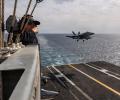
While Trump has been examining the possibility of stationing ground forces in the Middle East, CBS News reported that he has yet to define the exact conditions under which he would approve their use.

Chinese foreign ministry spokesperson Mao Ning said that the country believes that dialogue and negotiation are the only viable solutions to resolving disputes and that the continued escalation of the conflict serves no one's interests.

By all available indications, the White House drafted a face-saving note and handed it, ready-made, to Islamabad. Pakistani Prime Minister Shehbaz Sharif was supposed to then post it in the guise of a plea urging Trump to extend the deadline by two weeks 'to allow diplomacy to run its course'. Trump would then graciously accept Pakistan's 'request' and declare a ceasefire. Sharif dutifully posted the message on X. Except that he, or whoever was handling the account, forgot to delete the tell-tale first line visible in the edit history: 'Draft - Pakistan's PM Message on X'. Prem Panicker's must read blog on the Iran War.

Analysts predict a surge in gold and silver prices as investors seek safe-haven assets due to escalating tensions in the Middle East. The impact on domestic prices will depend on the conflict's duration, with geopolitical factors and macroeconomic data also playing a role.

Fight on toward goals that keep receding, or exit with most objectives unmet. Trump is agitated, his poll numbers falling below the Plimsoll line, his base fractured between those who back the war and those who remember that he campaigned on ending them.

Iran has rejected United States allegations that it is preparing attacks on American facilities, alleging that Washington, DC is attempting to escalate tensions in West Asia, Iranian state broadcaster Press TV reported.

This threat comes as the assembly of experts in Iran has reportedly reached a majority consensus regarding the successor to the late Supreme Leader Ayatollah Ali Khamenei, according to the Tehran-based Mehr News Agency (MNA).

Trump claims the United States is performing exceptionally well in its ongoing conflict with Iran, citing weakened Iranian military capabilities and a strong US position.

The intriguing bit is that Trump is likely to attend the talks in Islamabad this weekend -- if he does, it will be the clearest signal yet that the US is ready to exit the war with some sort of win to show, since he cannot afford to go for the talks and return empty-handed, notes Prem Panicker in his must read blog on the Iran War

'The entire US ecosystem built over decades at the bases in the Gulf region, especially the UAE, costing trillions of dollars have been decimated, dealing a mortal blow to the US Central Command's war capability,' points out Ambassador M K Bhadrakumar.

The fragile ceasefire in West Asia between the US and Iran to halt the hostilities in the region for two weeks faces renewed uncertainty as Tehran reportedly moved to block the strategic Strait of Hormuz once again due to Israel's intensified offensive against Hezbollah in Lebanon, according to Iranian state media Islamic Republic News Agency (IRNA), which US President Trump says was "not included" as part of the ceasefire deal.
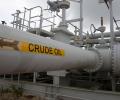
Crude oil prices experienced a significant drop following the announcement of a US-Iran ceasefire and the reopening of the Strait of Hormuz, leading to heavy selling by traders.

'Was the five-day pause ever meant to hold, or was it simply another instrument of signaling, of positioning, of buying time in a war where even the pauses are tactical?' asks Prem Panicker in his must read daily blog on the Gulf War.
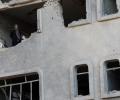
A spokesperson for the Central Khatam al-Anbiya Headquarters said that Iran's armed forces are prepared to intensify their response if aggression continues.
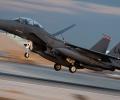
The military command clarified in a statement published on X that the aircraft were engaged in error during active combat operations on Sunday.
